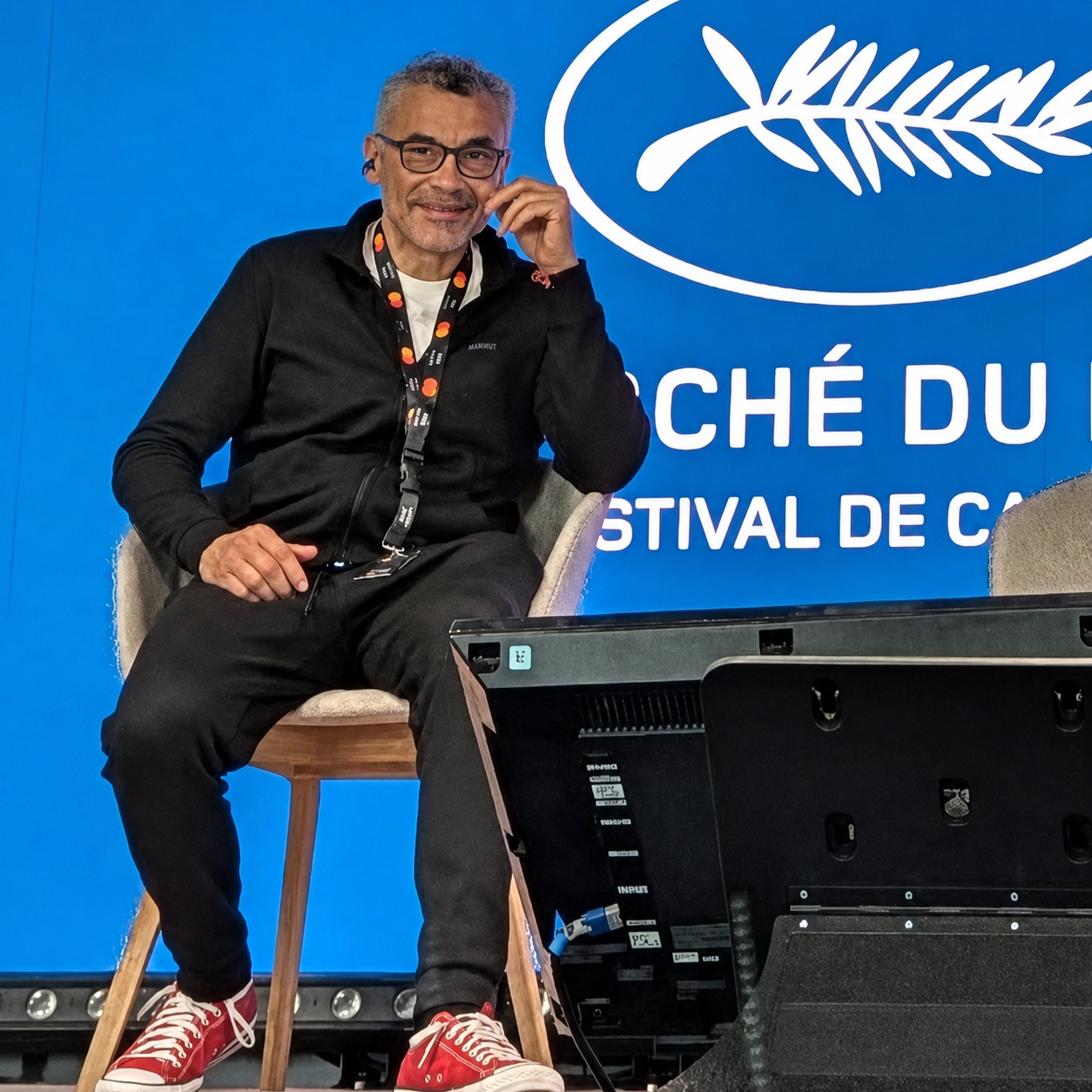
Let us be honest: when you hear the word Cannes, what appears first? The red carpet? Camera flashes? Black tie? People who look as if they were born already wearing sunglasses indoors?
All of that is true. But Cannes is also something else: a large, restless organism with markets, side programmes, small screens, late conversations, independent projects and strange visual ideas that still believe in the stubborn magic of an image.
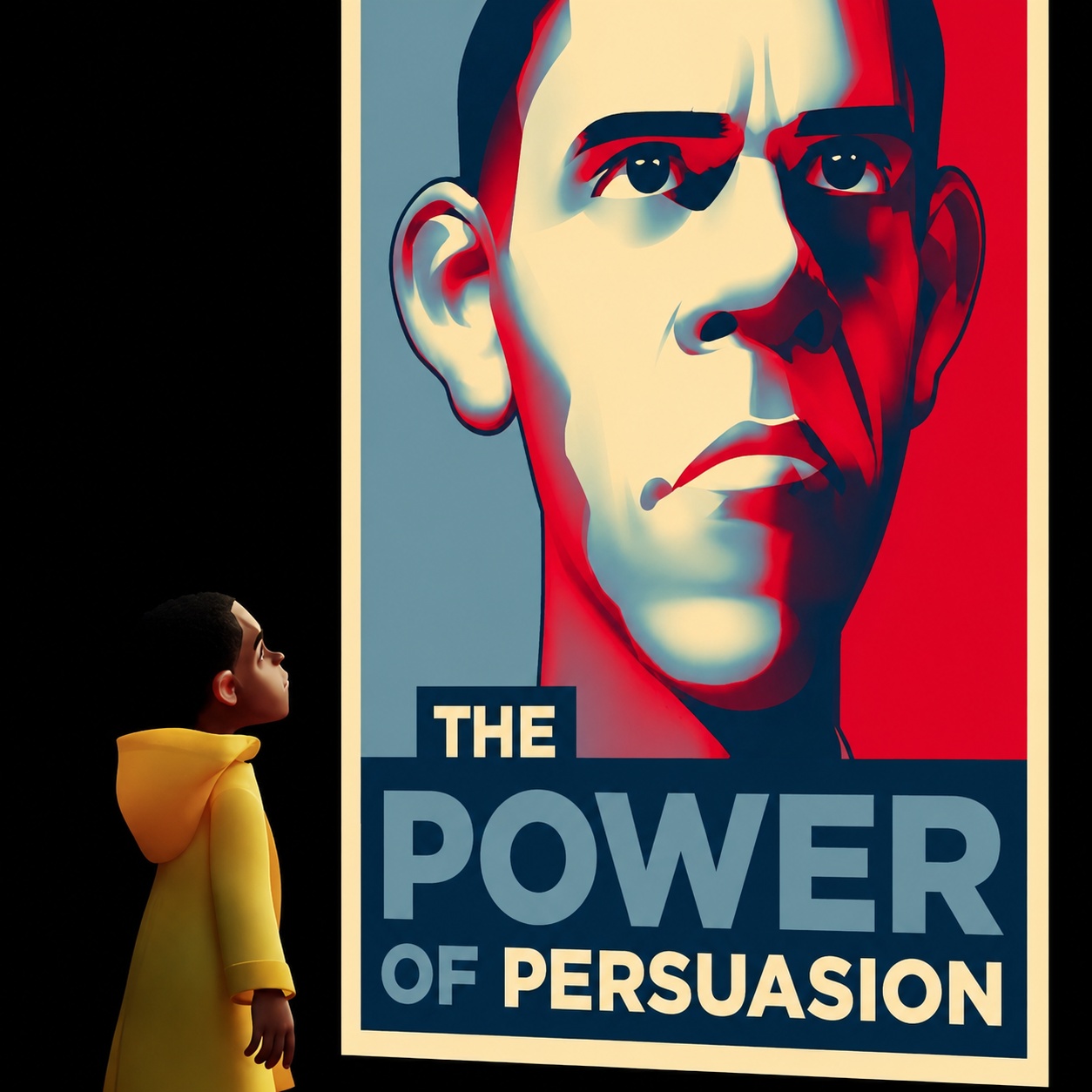
The Power of Persuasion, the animated project by Ernst Weber and Pavel “Pasha” Shapiro, belongs to that second Cannes: less ceremonial, more human, and often more interesting.
There are the official Cannes. And then there are the living Cannes.
There are the official Cannes: stairs, gowns, solemn faces and applause long enough to watch a short film and almost invent another one.
And then there are the other Cannes. Not less real. Perhaps even more real. The Cannes of small halls, late screenings, market corridors, accidental meetings, tired directors, students, buyers, dreamers and films carried not by a giant publicity machine, but by years of work and belief in the image.
In the open results of World Film Festival in Cannes — Remember the Future, The Power of Persuasion is listed as the March 2026 winner in the category Best Animation Film. This is not the main competition of the Festival de Cannes, and that distinction matters. But does it make the story smaller? Quite the opposite. The nerve of independent cinema often lives precisely in these “small Cannes” inside Cannes.
A frame as a building
Try looking at an animated frame like an architect. Where is the centre? Where does the eye move? What presses on the character? Where is the air? Where is the light? Where is the tension?
A good animated frame works like a small building. It has depth, proportion, balance, pressure and a route for the eye. A character does not simply enter a picture; he enters an environment. The interior becomes a psychological state. Light becomes material. Shadow becomes structure. Pause becomes space.
An architect builds a place into which a person walks.
An animator builds a world into which the eye enters.
The ITFS 2026 film list identifies The Power of Persuasion as a 2025 U.S. animated short, directed by Ernst Weber and Pasha Shapiro, produced by Pasha Shapiro, with a running time of 12 minutes and 30 seconds. For the viewer it is twelve and a half minutes. For the team, it is months of design, lighting, modelling, sound, editing and revision.

The power of persuasion
The title — The Power of Persuasion — almost defines animation itself.
What does animation do? It persuades us to believe in the impossible: in a created person, an artificial world, a movement that never existed, an emotion assembled from form, light and a sequence of frames.
It tells the viewer: look, this world does not exist — and now you are going to believe in it.
And the viewer believes.
Architecture does something similar. A strong space also persuades us: to move more slowly, to stop near a window, to feel height, silence, anxiety, solemnity or calm. So this conversation about animation is not a departure from architecture. It is an expansion of its field.

Pavel “Pasha” Shapiro: from Leningrad art school to digital Hollywood
The figure of Pavel “Pasha” Shapiro gives this story its deeper artistic line. His biography reads almost like a route through several eras of visual culture.
He comes from the Leningrad–St Petersburg artistic environment: the Secondary Art School in Leningrad, where drawing, composition, proportion, plastic form and spatial thinking were not decorative words, but daily discipline. Later he worked at the Kreographic studio at Channel Five of St Petersburg television — a place where academic visual culture met television graphics, title sequences, movement, editing and a new screen language.
Open biographical sources describe Pavel “Pasha” Shapiro as an American graphic designer and music video director known for his work with will.i.am and The Black Eyed Peas. The same sources note his beginnings as an art director in St Petersburg television, his work in motion design, and his later career in the United States.
What does this change? A lot. The Power of Persuasion no longer looks like an isolated festival cartoon. It becomes part of a long visual path: from academic drawing to screen culture, from form to motion, from television graphics to digital cinema, from artistic discipline to a free animated world.
A long collaboration
The collaboration between Shapiro and Ernst Weber is another important line. Open sources mention that they were classmates and that their friendship later developed into a professional creative partnership.
One of the earlier visible works of this tandem was the animated short Unpredictable Behaviour, a playful and darkly stylish encounter with the world of Sherlock Holmes and Dr Watson. Later, Shapiro and Weber appear in the context of Masters of the Sun, the VR/new media project associated with will.i.am and The Black Eyed Peas and selected for the 2018 Sundance New Frontier programme.
This is the trajectory that matters: classical visual school does not disappear in the digital age. It mutates. It becomes motion design, music video, VR, digital art, museum media, authorial animation.
A small film is not a small labour
Short animation is deceptive. The viewer thinks: only a few minutes. But behind those minutes are characters, environments, models, light tests, textures, sound, edits, corrections, new corrections, and that particular stubbornness without which independent animation simply does not appear.
In this sense, an animated film resembles an architectural project. First comes the idea. Then the sketch. Then the structure. Then endless adjustments. Only at the end does the viewer see a complete world and forget how much work was needed for it to look inevitable.
Instead of a grand finale
The story of The Power of Persuasion is a good reminder that authorial animation does not live only in large studios and large budgets. It often begins with a small team, a shared visual language, patience and trust in an idea.
The Cannes context is an important sign of attention and a good stage in the further life of the project. We wish Ernst Weber, Pavel “Pasha” Shapiro and the international team of the film new screenings, attentive viewers and a long festival journey.
May The Power of Persuasion continue to find its audience — not only among lovers of animation, but also among those interested in visual culture, art school, digital media and the spatial language of the contemporary image.
And we will be watching what happens next.